

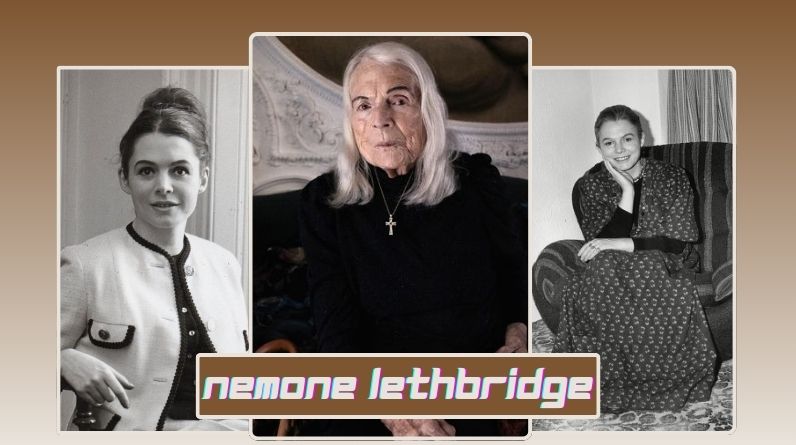
- Nemone Lethbridge was one of Britain’s first female barristers, called to the Bar in 1956.
- She is best known for defending the Kray twins and for her lifelong fight against institutional injustice.
- Her career was derailed for nearly 20 years due to sexism and her marriage to a wrongfully convicted man.
- Beyond high-profile cases, her lasting impact lies in legal aid, pro bono work, and systemic reform.
- Her story reveals how class, gender, and morality shaped the British legal profession in the 20th century.
Who is Nemone Lethbridge?
Nemone Lethbridge is a British barrister, writer, and legal reformer whose career represents a pivotal chapter in the history of women in English law. Called to the Bar in 1956, she entered a profession that was not only overwhelmingly male but openly hostile to women. Lethbridge became nationally known for representing the Kray twins in the late 1950s, yet her deeper significance lies in how her life exposes the intersection of gender discrimination, class prejudice, and justice in post-war Britain.
Unlike many biographical profiles that focus narrowly on her association with notorious criminals, Nemone Lethbridge’s importance is best understood through her ethical stance: an unwavering belief that the law must serve fairness rather than power, reputation, or social respectability.
A Legal Career Shaped by Exclusion, Not Privilege
Breaking Into the Bar When Women Were Not Wanted
When Lethbridge began her career, women had been legally allowed to practise law for less than four decades. In practical terms, acceptance lagged far behind legislation. At her first chambers, she was barred from prosecution work entirely and denied basic facilities, including access to toilets. Instead, she survived on dock briefs—cases assigned at court to unemployed barristers, often chosen by defendants based on appearance alone.
This structural exclusion was not informal bias but an institutional reality. According to historical records from the Bar Council, fewer than 3% of practising barristers in the mid-1950s were women, and most were confined to family or administrative law. Criminal defence was considered unsuitable.
The Kray Twins: Opportunity Born of Marginalisation
Lethbridge’s association with Ronnie and Reggie Kray emerged not from ambition but availability. Senior male barristers declined Saturday court work, allowing her to take cases others did not want. Her early defence of the twins on minor charges led to repeat instructions and steady work.
While popular culture often portrays her as “the Krays’ barrister,” the reality is more revealing: her success with them stemmed from preparation, courtroom discipline, and an ability to communicate credibility across class lines. Importantly, she refused gifts and bribes, reinforcing her professional integrity in an environment where intimidation was common.
The Cost of Conscience: Marriage and Professional Exile
Jimmy O’Connor and the Limits of Legal Tolerance
In 1959, Nemone Lethbridge married Jimmy O’Connor, a man convicted of murder in 1942 whose death sentence had been commuted amid serious doubts about his guilt. When their marriage became public in 1962, the legal profession responded decisively: she was no longer welcome in chambers.
This was not a matter of formal misconduct. No rule barred her from practice. Yet reputational purity mattered more than justice. Her exclusion highlights an unspoken doctrine of the time: barristers were judged not only by conduct but by social conformity.
As a result, Lethbridge spent nearly two decades unable to practise law—a loss of professional years that no modern equality framework could justify.
Reinvention Through Writing and Exile
Mykonos, Television Drama, and Social Critique
During her enforced absence from the Bar, Lethbridge turned to writing. Living partly in Greece, she contributed to landmark BBC series such as The Wednesday Play and Play for Today, tackling themes including miscarriage, postnatal depression, and capital punishment—subjects rarely addressed on television at the time.
Her work coincided with broader social change. For example, Britain suspended the death penalty in 1965, a cause both she and O’Connor had publicly opposed. While not solely responsible, her creative output formed part of a wider cultural reckoning with state power and moral certainty.
Return to the Bar and a Different Kind of Legacy
Law as Service, Not Status
Lethbridge returned to legal practice in 1981. The profession had changed: women and ethnic minorities were no longer novelties, though inequality remained. Rather than pursue prestige, she focused on legal aid and underserved communities.
In the mid-1990s, as government funding for legal aid was reduced, she founded the Our Lady of Good Counsel Law Centre in Stoke Newington. The centre continues to provide free legal advice, particularly for asylum seekers and vulnerable individuals.
According to Ministry of Justice data, legal aid provision in England and Wales fell by over 40% between 2010 and 2018. Lethbridge’s work anticipated this crisis decades earlier, making her contribution unusually forward-looking.
Common Misconceptions About Nemone Lethbridge
- She was defined by the Krays: In reality, they were a small part of a much broader ethical and professional journey.
- Her career ended because of scandal: It ended because of institutional prejudice, not misconduct.
- She was rehabilitated by fame: Her later recognition followed decades of unacknowledged service.
Why Nemone Lethbridge Still Matters
Nemone Lethbridge’s story is not simply historical. It raises unresolved questions about professional morality, reputational justice, and how legal systems treat those who challenge consensus.
Her lifelong effort to overturn Jimmy O’Connor’s conviction—supported by new evidence and revisited through modern review mechanisms—underscores a critical reality: miscarriages of justice do not expire with time.
Key Takeaways and FAQs
What makes Nemone Lethbridge unique in British legal history?
She combined frontline criminal defence, cultural influence through writing, and grassroots legal aid—rarely seen in one career.
Was she successful despite discrimination?
She was successful because she adapted to discrimination without compromising ethics, though at significant personal cost.
What can modern lawyers learn from her career?
That professional legitimacy should come from service and integrity, not institutional approval alone.
Nemone Lethbridge’s life demonstrates that justice is not a static principle enforced by institutions—it is a continuous struggle sustained by individuals willing to endure exclusion for the sake of conscience.