

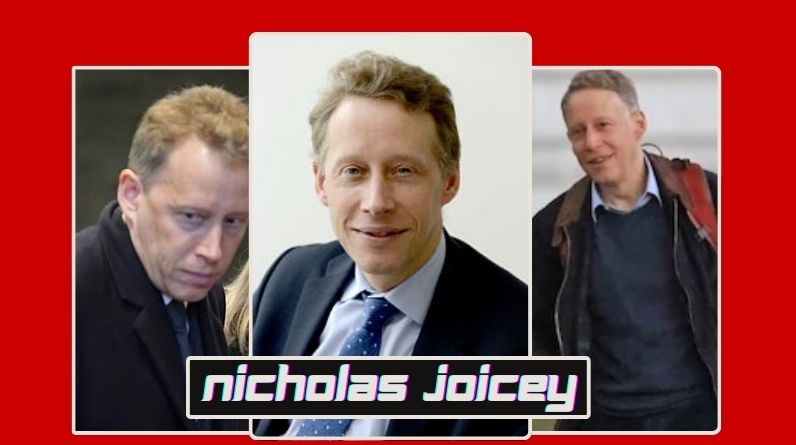
- Primary identity: Senior British civil servant and public sector leader
- Known for: Strategic and operational leadership across major UK government departments
- Key milestones: Second Permanent Secretary at Defra, senior roles at HM Treasury, DWP, and the Cabinet Office
- Current relevance: Interim Chief Operating Officer at the Blavatnik School of Government
- Recognition: Appointed Companion of the Order of the Bath for public service
Nicholas Joicey: Background and Early Life
Nicholas Beverley Joicey was born on 11 May 1970 in Guisborough, North Yorkshire. Raised in the north of England, his early life was shaped by a strong academic environment and an interest in how institutions influence society. From an early age, he showed a curiosity about politics, culture, and the way public decisions affect everyday life.
His formal education laid the foundation for a career that would later combine intellectual depth with practical leadership. Joicey studied History at the University of Bristol, where he developed strong analytical and writing skills. He later pursued doctoral research at Peterhouse, University of Cambridge, completing a PhD in modern history. His doctoral work focused on the cultural and political impact of publishing in twentieth-century Britain, reflecting a long-standing interest in communication, public understanding, and governance.
This academic background is notable because it differs from the more technical or economic training often associated with senior civil servants. It helped shape Joicey’s reputation as a thoughtful administrator who values context, evidence, and long-term perspective in public decision-making.
Career Journey and Rise to Recognition
Before entering government, Nicholas Joicey began his professional life in journalism. In the mid-1990s, he worked at a national newspaper, an experience that sharpened his ability to communicate complex ideas clearly and understand public debate. Although his time in journalism was relatively brief, it played an important role in developing skills that would later prove valuable in public service.
Joicey soon transitioned into the UK Civil Service, where he embarked on a career spanning more than two decades. His early years were marked by steady progression through analytical and advisory roles, particularly in areas related to finance, economic policy, and international affairs. His combination of strong communication skills and strategic thinking helped him stand out within the civil service.
His rise to senior leadership came through a series of demanding roles that required both policy expertise and operational oversight. Over time, he became known as a civil servant capable of managing large teams, complex budgets, and politically sensitive priorities.
Key Roles at HM Treasury and International Finance
One of the most formative phases of Nicholas Joicey’s career took place at HM Treasury. During his time there, he worked on major economic and financial issues at both domestic and international levels. He held senior positions that involved close engagement with ministers and senior officials, contributing to the development and communication of economic policy.
Joicey also served in international finance roles, representing the United Kingdom in global economic institutions. His work included engagement with international financial bodies based in Washington, D.C., where he dealt with issues such as development finance, global economic stability, and international cooperation. These roles gave him a global perspective that later informed his approach to domestic policy challenges.
His Treasury experience is often seen as a cornerstone of his career, providing deep expertise in public finance and economic strategy that would later underpin his leadership in other departments.
Leadership at the Department for Work and Pensions
After his time at the Treasury, Nicholas Joicey moved into senior leadership at the Department for Work and Pensions. As a Director-General, he was responsible for overseeing financial management within one of the largest and most complex departments in government.
This role required balancing fiscal discipline with the delivery of essential public services. Managing large budgets, welfare systems, and operational performance demanded a high level of accountability and attention to detail. Joicey’s work during this period reinforced his reputation as a senior official capable of handling scale and complexity without losing sight of public impact.
His time at the department also exposed him to the social dimensions of policy, particularly issues related to employment, social security, and public trust in government institutions.
Cabinet Office and Cross-Government Coordination
Nicholas Joicey later joined the Cabinet Office as a Director-General, a role that placed him at the centre of cross-government coordination. The Cabinet Office plays a critical role in aligning departmental priorities and supporting the effective functioning of government as a whole.
In this position, Joicey worked on economic and domestic policy issues that cut across departmental boundaries. The role required close collaboration with ministers, senior officials, and external stakeholders. His ability to bridge policy and operations was particularly valuable during periods of economic uncertainty and administrative reform.
This phase of his career highlighted his strengths as a coordinator and strategic leader, rather than a specialist confined to a single policy area.
Second Permanent Secretary and Group COO at Defra
In July 2023, Nicholas Joicey was appointed Second Permanent Secretary and Group Chief Operating Officer at the Department for Environment, Food and Rural Affairs. This appointment marked one of the most senior roles of his career.
As Group COO, he became responsible for the department’s operational performance, governance, and strategic delivery. The role sits at the intersection of policy ambition and practical implementation, covering areas such as environmental protection, food systems, agriculture, and sustainability.
His leadership at Defra has been particularly relevant at a time when environmental policy, climate resilience, and land use reform are central to national priorities. Joicey’s background in finance and strategy positioned him to support complex policy delivery while maintaining operational discipline.
Secondment to the Blavatnik School of Government
In January 2025, Nicholas Joicey began a one-year secondment as Interim Chief Operating Officer at the Blavatnik School of Government. This move reflected a shift from day-to-day government operations to an environment focused on leadership development, research, and public policy education.
In this role, he works closely with academic leadership and professional staff to support the school’s strategic direction and operational effectiveness. His presence brings practical government experience into an academic setting, helping bridge the gap between theory and real-world public administration.
The secondment also highlights Joicey’s broader commitment to developing future public leaders and contributing to long-term improvements in governance.
Public Recognition and Professional Contributions
Nicholas Joicey’s contributions to public service have been formally recognised through national honours. He was appointed a Companion of the Order of the Bath in recognition of his service and leadership within government.
In addition to his civil service roles, he has contributed to higher education governance as an independent trustee and chair of a university finance and investment committee. These roles align with his academic background and demonstrate ongoing engagement with education, culture, and institutional leadership beyond government.
Personal Life and Public Profile
While Nicholas Joicey maintains a relatively low public profile, aspects of his personal life are widely known due to his marriage to Rachel Reeves, a senior British politician. Together, they have two children and balance demanding professional responsibilities with family life.
Despite public interest, Joicey is generally regarded as a non-partisan civil servant who keeps the focus on his professional responsibilities rather than public visibility. This approach is consistent with traditional expectations of senior civil service roles.
Legacy, Influence, and Career Perspective
Nicholas Joicey’s career illustrates a model of modern public service leadership that combines intellectual depth, operational competence, and adaptability. Unlike figures defined by a single policy area, his influence comes from breadth of experience across finance, welfare, environmental policy, and government coordination.
His transition between departments and sectors demonstrates an ability to manage change and complexity, while his academic engagement suggests a long-term interest in improving how governments function and how future leaders are prepared.
Rather than being known for high-profile public statements, Joicey’s impact is best understood through institutional leadership and sustained contribution to government effectiveness.
Frequently Asked Questions About Nicholas Joicey
What is Nicholas Joicey best known for?
He is best known for senior leadership roles within the UK Civil Service, including serving as Second Permanent Secretary at Defra and holding key positions at HM Treasury, the Cabinet Office, and the Department for Work and Pensions.
What is his educational background?
He studied History at the University of Bristol and completed a PhD in modern history at the University of Cambridge.
Is Nicholas Joicey still active in public service?
Yes. He remains active through his secondment at the Blavatnik School of Government and ongoing involvement in public and educational institutions.
How should his career be understood?
His career is best seen as an example of long-term public service leadership focused on strategy, operations, and institutional effectiveness rather than public visibility.