

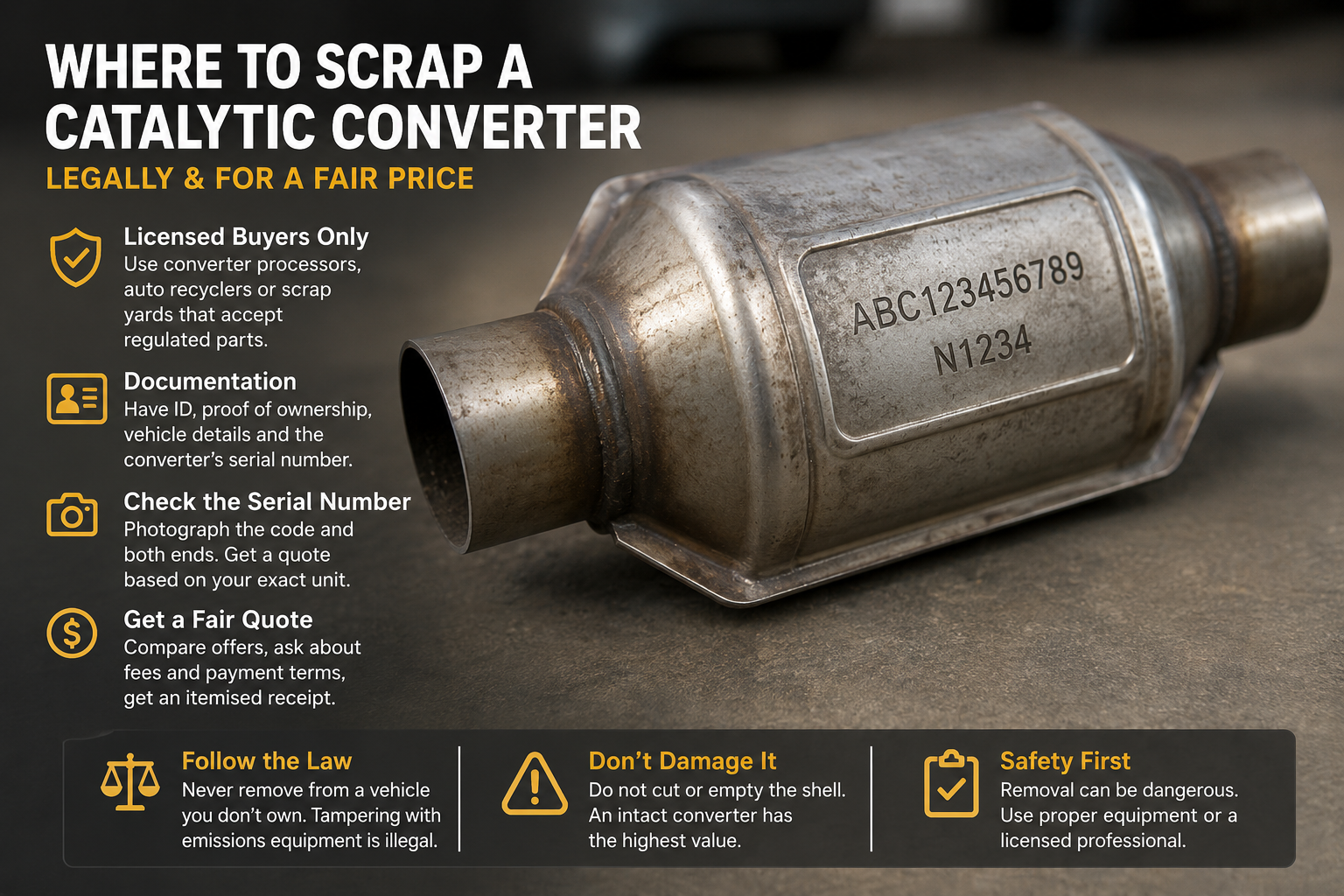
If you’re deciding where to scrap a catalytic converter, start with a licensed converter processor, automotive recycler or metal yard that accepts regulated vehicle parts and gives serial-number-based quotes. Call before travelling. Many general scrap yards refuse loose converters, while state laws can require photo ID, proof of ownership, vehicle records and traceable payment.
A converter is not priced like ordinary steel. Its value comes mainly from platinum, palladium and rhodium in the internal substrate, and the recoverable amount varies by vehicle and unit.
Compare the legitimate buyer options
| Buyer | Best suited to | What to confirm |
|---|---|---|
| Specialist converter processor | A removed, identifiable unit | Serial lookup, grading method and payment terms |
| Licensed auto recycler | A complete end-of-life vehicle | Towing, title rules and whether the converter must remain fitted |
| Scrap yard accepting converters | A local, documented sale | Licence, current buying policy and required records |
| Repair shop with a recycling partner | A converter replaced during repair | Credit on the invoice and chain of custody |
If the converter came from a dead vehicle you still own, compare the part-out offer with what the whole car is worth as scrap before cutting anything. An intact car can be easier to document, tow and sell, and removing a valuable component may reduce the complete-vehicle quote by more than expected.
Why the serial number matters
Converters that look alike may contain different precious-metal loads. A serious buyer checks the stamped code, manufacturer, vehicle application and whether the internal ceramic or metallic substrate is complete.
Photograph the code before calling. Also take clear pictures of both ends and the shell. Ask the buyer to quote against that exact unit rather than promise a broad “up to” amount. If the number is unreadable, the processor may grade the converter conservatively or require an in-person inspection.
Do not open or empty the shell. Processors recover the substrate through controlled decanning, crushing, sampling and assay. A cut, hollow or damaged unit is harder to identify and can lose most of its value.
Documents buyers commonly request
Catalytic converter theft has led many jurisdictions to tighten purchase rules. Requirements vary, but prepare:
- Government-issued photo identification
- Vehicle title, registration or repair invoice
- VIN and vehicle details
- Proof showing how you acquired a loose converter
- Business or repair licence for commercial quantities
- Bank or electronic-payment details where cash purchases are restricted
PMR, a converter processor, says compliant outlets commonly require seller identification, proof of origin and transaction records. Check your state law and the buyer’s policy before removal. A yard that asks no ownership questions is a warning sign, not a convenience.
How a fair quote is calculated
Daily commodity prices matter, but multiplying a converter’s total weight by a platinum price does not work. Most of the unit is a steel shell and ceramic or metallic substrate. Only a small coating contains the platinum-group metals.
Buyers usually use one of three methods:
- Serial-number grading. A database associates the unit with a tested recovery history.
- Toll refining or assay. A processor samples prepared material and pays against measured recovery, usually for commercial batches.
- Category pricing. An unidentified unit receives a broad grade such as small domestic, large domestic, aftermarket or diesel.
For one converter, serial grading is normally the clearest route. Request an itemised receipt showing the unit code, grade, gross amount and deductions. Compare net payment, not the headline quote.
Should you remove it yourself?
If the converter is still fitted to a road-going vehicle, removal can make the exhaust illegal and unsafe. Federal law restricts tampering with required emissions equipment. A failed converter should be diagnosed and replaced by a qualified repairer with the correct compliant part.
For a vehicle already destined for dismantling, check the complete-car buyer’s terms first. Cutting under a raised car brings crush, fire and inhalation hazards. A recycler with lifting equipment can handle the vehicle safely.
Never remove a converter from a vehicle you do not own, including an abandoned car. Property possession and vehicle ownership are different legal questions.
Questions to ask before accepting a price
- Is the business licensed to buy loose converters here?
- Which ownership records do you need?
- Is the offer tied to my photographed serial number?
- Can the amount change after inspection, and for what reasons?
- Are there assay, refining, shipping or account fees?
- How and when will payment be made?
- Will I receive a transaction receipt?
For shipped units, photograph the package contents and use tracked, insured delivery. Confirm who bears the loss if the package disappears and whether a rejected unit will be returned.
Protect the value without creating risk
Keep the converter dry and intact. Record its number, weight and origin. Obtain at least two quotes from buyers willing to explain their grading. Commodity prices move, so quotes may expire quickly, but pressure to ship immediately is still a reason to pause.