

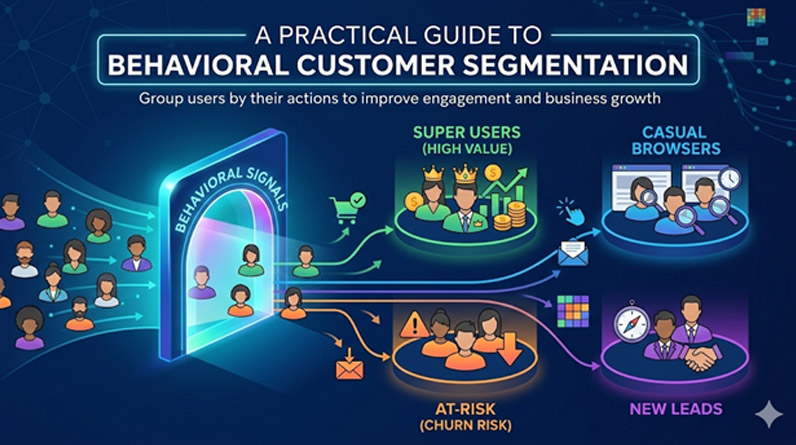
In the early days of digital marketing, knowing the age, location, and gender of an audience was considered the gold standard for reaching potential buyers. While these demographic details still provide a foundation, they rarely tell the whole story of why a person chooses one brand over another. Modern businesses need a more sophisticated approach to stay relevant in a competitive landscape, and this is where customer segmentation based on behavior takes center stage.
By focusing on how people interact with your brand, you gain a dynamic view of their needs and preferences. This method allows you to move away from static profiles and toward a living understanding of user intent. When you recognize the patterns in how someone browses your site or responds to your emails, you can tailor your message to meet them exactly where they are in their journey.
Implementing this strategy requires a shift in mindset from broad broadcasting to personalized engagement. It is about observing the small signals that customers leave behind during every digital touchpoint. When these signals are collected and interpreted correctly, they form a powerful map that guides your marketing efforts toward higher efficiency and deeper connections.
Understanding the layers of customer segmentation
Effective marketing relies on the ability to divide a vast audience into manageable, meaningful groups. While geographic or psychographic data provides context, observing actual actions provides the most reliable evidence of future behavior. This layered approach to customer segmentation ensures that your resources are spent on the leads most likely to convert, rather than being wasted on uninterested parties.
Developing a strategy that prioritizes behavioral data means looking at variables like purchase frequency, product usage, and website engagement. These factors provide a clear picture of who your “super users” are and who might be at risk of leaving. By identifying these groups, you can create specific campaigns that reward loyalty or re-engage those who have drifted away, making your operations far more proactive.
Small businesses are increasingly turning to smart AI agent automation for WhatsApp conversations to bridge the gap between initial interest and final sale. This type of interaction provides a wealth of behavioral data, as the way a user asks questions or responds to prompts reveals their level of urgency and specific pain points. Capturing these nuances is essential for any modern entrepreneur looking to refine their outreach.
Distinguishing behavior from demographics
Demographics tell you who your customer is, but behavior explains what they actually do. A person’s age or job title might suggest an interest in a specific product, but their browsing history confirms it. Relying solely on the “who” often leads to assumptions that can result in missed opportunities or irrelevant messaging that pushes prospects away.
When you distinguish between these two layers, you start to see that people from very different demographic backgrounds often exhibit the same purchasing behaviors. A college student and a retired executive might both be looking for high-quality productivity software for different reasons. Treating them as a single behavioral segment allows you to address their shared needs more effectively than treating them as separate age groups.
Exploring the creative potential of a TikTok for business strategy can reveal hidden segments within your younger demographic that traditional tools might overlook. The way users engage with short-form video content—how long they watch, which creators they follow, and how they comment—offers a goldmine of behavioral insights. This data allows for a much more granular approach to reaching audiences on their preferred platforms.
The importance of tracking user intent
Intent is the driving force behind every click and search query. Understanding whether a user is looking for information, comparing prices, or ready to buy is the key to providing a seamless experience. Without tracking this intent, a business risks sending a “buy now” offer to someone who is still in the early research phase, which can feel intrusive and premature.
By categorizing users based on their intent, you can deliver content that feels helpful rather than sales-driven. A user who frequently visits your blog to read “how-to” articles is showing a different intent than one who repeatedly checks your pricing page. Recognizing these differences allows your sales and marketing teams to prioritize their efforts on the leads that are showing the highest readiness to commit.
For example, a financial services marketing agency working with fintech teams can analyze user intent to deliver campaigns that reach prospects at exactly the right moment in their decision journey, using personalized messaging that builds trust, drives engagement, and increases the likelihood of conversion.
Intent tracking also helps in identifying friction points within your digital ecosystem. If a large segment of users consistently drops off at the same stage of your checkout process, their behavior is signaling a problem with the user interface or the payment options. Addressing these behavioral cues is a direct way to improve the overall journey and increase your conversion rates without needing to increase your total traffic.
Implementing behavioral strategies in daily operations
Once you have identified your segments, the next step is integrating these insights into your everyday workflows. This means moving beyond theoretical data and into active experimentation. Successful implementation involves setting up triggers that respond to specific actions, ensuring that your brand remains top-of-mind without being repetitive or annoying.
Consistency is vital when applying behavioral customer segmentation to your operations. The goal is to create a cohesive experience where the user feels understood across every channel, from social media to direct email. This level of synchronization requires clear communication between departments and a centralized system that tracks interactions in real-time, allowing for a unified view of the customer.
Using these insights helps you allocate your budget more effectively. Instead of spending equally across all segments, you can focus on the high-value behaviors that indicate long-term growth. This strategic distribution of resources ensures that you are nurturing the relationships that have the most potential for recurring revenue and brand advocacy, which is essential for sustainable business scaling.
Optimizing the purchase journey
The purchase journey is rarely a straight line; it is a series of decisions influenced by various touchpoints. By observing behavioral patterns, you can identify the specific moments where a prospect needs a gentle nudge or more information. For example, a user who adds items to a cart but doesn’t finish the transaction might just need a reminder or a simple answer to a final question.
Mapping these behaviors allows you to create “if-this-then-that” scenarios that automate the most effective responses. If a user spends a significant amount of time on a specific feature page, you might automatically offer them a more detailed guide or a video demonstration. This level of responsiveness makes the purchasing process feel intuitive and personalized, which significantly boosts the likelihood of a successful sale.
Furthermore, optimizing the journey involves simplifying the path to the finish line. If your data shows that users frequently get lost in complex navigation menus, you can use behavioral cues to present the most relevant links more prominently. The less effort a customer has to put into finding what they need, the more positive their perception of your brand will be, regardless of the complexity of the product itself.
Enhancing retention through active engagement
Acquiring a new customer is often more expensive than keeping an existing one, which makes retention a top priority. Behavioral data is an incredible tool for identifying when a loyal customer is starting to disengage. A sudden drop in login frequency or a lack of response to regular updates are clear signals that you need to take action to win back their interest.
Retention strategies should be as personalized as acquisition ones. By looking at a customer’s past usage, you can offer them new features or upgrades that genuinely add value to their specific situation. This shows that you are paying attention to their needs and that you value their continued partnership. It transforms the relationship from a one-time transaction into an ongoing collaboration.
Active engagement also means asking for feedback based on behavior. If a user has just completed a significant task using your service, that is the perfect time to ask for a review or a suggestion for improvement. Their recent experience is fresh, and their input will be far more valuable than a generic survey sent at random. This proactive approach reinforces the idea that the customer’s voice is a central part of your business growth.
Transforming behavioral data into lasting relationships
The true power of customer segmentation lies in its ability to humanize the digital experience. While the tools we use are technological, the goals are deeply personal: we want to understand and be understood. By paying close attention to behavior, you are showing your audience that you respect their time, their choices, and their unique path through the world.
As you refine your guide to behavioral insights, remember that data is only as good as the action it inspires. The most successful businesses are those that use this information to build trust and provide genuine value at every turn. It is not about manipulation, but about creating an environment where the customer feels supported and empowered by the brand they have chosen.
The future of marketing belongs to those who can balance technical precision with human empathy and the correct use of AI agents. By embracing behavioral segmentation, you are choosing a path of continuous improvement and authentic connection. Stay curious about why your customers do what they do, and you will find that the opportunities for growth are limited only by your willingness to listen and adapt.