

Garden fence panels come in several distinct styles, and the right choice depends on privacy, budget, exposure to weather and the look you want. The most common option in UK gardens is the lap panel, but closeboard, picket, slatted and trellis panels all suit different needs. Two factors matter as much as the style itself: the quality of the timber and the way it has been treated against rot.
This guide explains the main panel types, the difference between pressure-treated and dip-treated timber, and how to match a panel to your garden. It is written for homeowners planning a new fence and for tradespeople specifying panels for a job, so every section focuses on practical differences rather than marketing labels.
Lap panels
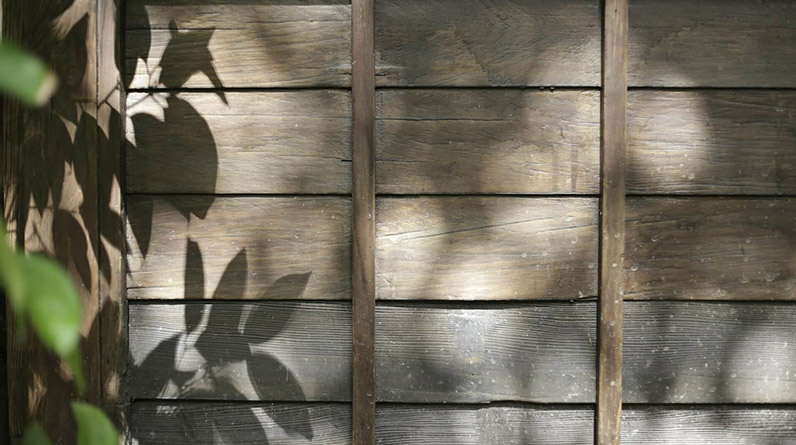
Lap panels, also known as overlap panels, are the most popular and cost-effective fence panels in the UK. They are made from horizontal timber slats that overlap one another within a solid outer frame, which is why they are sometimes called larch-lap or waney-lap panels. The overlapping construction blocks direct sightlines and sheds rainwater down the face of the panel.
The overlap design is what makes these panels so widely used. Because the boards sit over one another rather than butting edge to edge, the panel gives full privacy while using less timber than a solid board fence, which keeps the price down. The outer frame holds the slats in place and adds rigidity, so a standard six-foot panel drops straight into concrete or timber posts without extra bracing.
Lap panels do have limits worth knowing before you buy. The thin overlapping slats are lighter and less robust than the boards used in closeboard fencing, so they cope less well with high wind on very exposed sites. For an average garden they offer the best balance of privacy, appearance and cost, which is why they remain the default choice for boundary and screening fences across the country.
Closeboard and featheredge panels
Closeboard panels are the strongest and most durable timber fence panels, built for exposed sites and long service life. They are constructed from vertical featheredge boards, each tapered so it overlaps its neighbour, fixed onto horizontal rails. This makes a dense, heavy panel with no gaps, which is why closeboard fencing is often specified where security and wind resistance matter.
The difference from a lap panel is structural. A closeboard panel uses thicker, overlapping vertical boards rather than thin horizontal slats, so it carries more weight and resists impact and gusts far better. The trade-off is cost and effort: closeboard costs more per metre and is heavier to handle during installation, so it is usually reserved for boundaries that take a beating from the weather or need extra strength.
Featheredge fencing can also be built board by board on site rather than as a ready-made panel. This suits sloping ground, because each board is fitted individually and the fence can step or rake to follow the gradient. Where the ground is level and speed matters, the pre-assembled panel version gives most of the same strength with a much quicker fit.
Picket, slatted and trellis panels
Decorative panels prioritise appearance and light over full privacy, and the main options are picket, slatted and trellis. Each lets air and light through the fence line, so they suit front gardens, internal divisions and boundaries where you do not want a solid barrier. The choice between them comes down to the style you are after.
Picket panels use spaced vertical boards with gaps between them, giving the traditional cottage-garden look that marks a boundary without closing it off. Slatted panels use horizontal or vertical timber slats with even gaps, which reads as clean and contemporary and works well with modern planting and buildings. Both let some wind pass through, which is an advantage on exposed plots because the fence catches less of the gust.
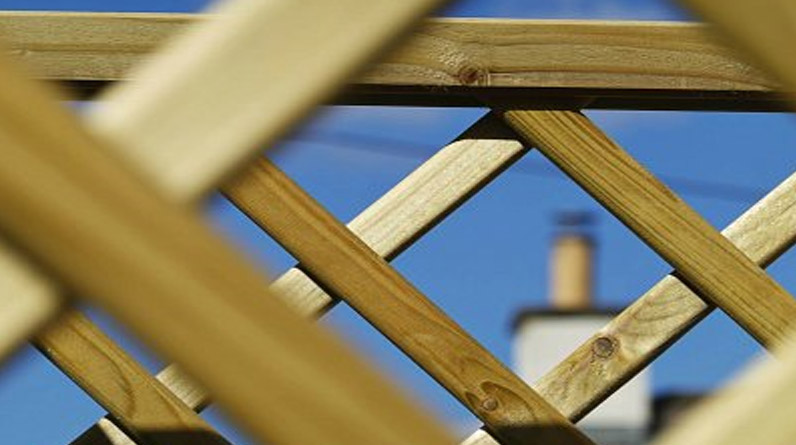
Trellis panels are the most open of the three, built as an open lattice of thin timber laths. They are used on their own as a light screen or fixed on top of a solid panel to add height and support climbing plants. Because trellis carries little wind load, adding a trellis topper is a practical way to gain height and privacy over time as planting fills in, without overloading the posts.
Timber treatment: pressure-treated versus dip-treated
The treatment of the timber matters as much as the panel style, because it determines how long the fence lasts before rot sets in. Bare softwood left outdoors decays within a few years, so almost all fence panels are treated with preservative before sale. There are two main methods, and they are not equal.
Dip-treated panels are lowered into a tank of preservative so the timber takes on a surface coat. This protects the outer layer and is the cheaper option, but the preservative does not penetrate deep into the wood, so dip-treated panels usually need re-treating with a fence preservative every year or two to keep them protected. They are often supplied in a light brown or golden shade.
Pressure-treated panels are treated in a sealed vessel that forces preservative deep into the timber under pressure. This gives far longer protection against rot and insect attack, often backed by a manufacturer guarantee of ten years or more, and needs little or no re-treatment. Pressure-treated timber is typically green when new and weathers to a silvery grey. For a fence you want to fit and forget, pressure treatment is the more economical choice over its lifetime despite the higher upfront price.
Panel sizes, posts and gravel boards
Fence panels are supplied in standard widths and a range of heights, and they need matching posts and gravel boards to make a complete fence. The near-universal panel width in the UK is 1.83 metres, the imperial six foot, which sets the spacing of the posts. Heights step down from six foot through five, four, three and two foot, letting you match the fence to its purpose.
Posts hold the panels upright and carry the wind load, so they must suit the panel weight and exposure. Concrete posts and gravel boards give the longest-lasting result because no timber sits in the damp ground, and panels simply slot into the grooved sides. Timber posts give a warmer, all-wood look and are lighter to handle, though the base needs proper protection where it meets the soil.
Gravel boards run along the bottom of the fence, between the posts and beneath the panel. They lift the panel clear of wet ground, which is the single most effective way to slow rot, because the vulnerable bottom edge no longer sits in soil and standing water. A concrete gravel board takes this wear in place of the panel and is far cheaper to replace than a whole panel when it eventually decays.
How to choose the right fence panels
The right fence panel is chosen by working through privacy, exposure, timber treatment and budget in that order. Starting with function rather than price avoids the common mistake of buying the cheapest panel and then paying again when it fails early or fails to do its job.
Begin with what the fence needs to do. For full privacy and screening on a normal garden, lap panels give the best value; for a windy or exposed boundary, or where strength matters, closeboard is worth the extra cost. Where you want light, air or a decorative line rather than a solid barrier, picket, slatted or trellis panels fit better. Match the height to the job, from a full six-foot boundary down to a low two-foot divider.
Then settle the timber and the fittings. Choose pressure-treated panels where you want long life with little maintenance, and dip-treated only where budget is tight and you are willing to re-treat regularly. Pair the panels with concrete posts and gravel boards for the longest-lasting result, and confirm the panel width matches your post spacing before you order. If any of these choices are unclear for your site, a timber merchant can advise on the right specification and quantities for the run you are fencing.