

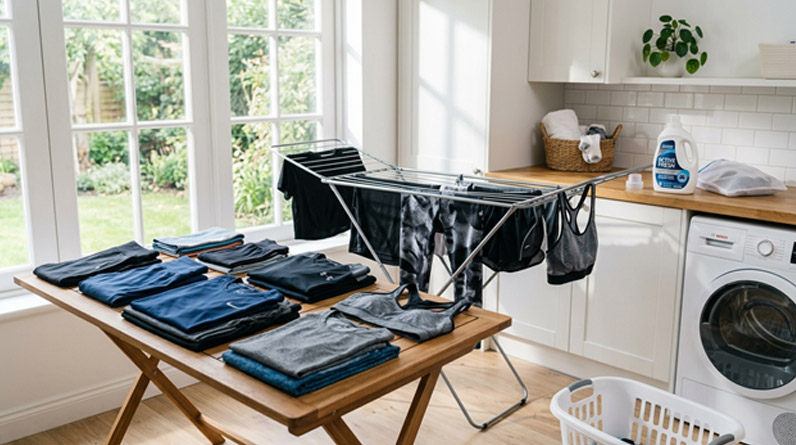
After a workout, it is easy just to throw your sweaty gym clothes into a laundry basket and move on. However, gym clothes need more care than regular clothes.
Sweat, body oils, bacteria and synthetic fabrics all need proper care to keep your gym clothes fresh and durable. Without the right washing routine, your workout clothes can quickly develop bad smells, lose their stretch or stop working the way they were designed to.
Learning how to wash your gym clothes properly can help keep them fitting, breathable and able to wick away moisture. Importantly, it can make your expensive gym clothes last longer and keep them feeling comfortable during every workout.
Many people use hot water and extra detergent, thinking it will clean their gym clothes better. However, too much heat and detergent can actually damage the fabrics and trap odours.
Whether you wash your gym clothes at home or use a laundry service, understanding the right care techniques helps your gym clothing stay fresh, functional and ready for repeated use.
Why Gym Clothes Need Different Care
Gym clothes are made differently from regular clothes. Most gym clothes contain materials like polyester, nylon or spandex. These fabrics are lightweight, breathable and flexible, which makes them ideal for exercise.
They also absorb sweat, body oils and bacteria more easily than natural fibres. So simply tossing your gym clothes into a standard wash cycle is not always enough.
Don’t Leave Sweaty Clothes Sitting in a Gym Bag
Leaving workout clothing in a closed bag for hours can create strong, bad smells. Warm, moist environments allow bacteria to multiply rapidly, making odours much stronger and harder to remove later.
Instead, air out your gym clothes as soon as possible after exercising. Hanging them in a ventilated area before washing helps moisture evaporate and reduces bacterial growth.
Separate Activewear from Heavy Laundry
Wash your gym clothes separately from heavy fabrics like jeans, towels or hoodies. Rough materials can damage delicate fibres and shorten the lifespan of your gym clothes.
Keeping activewear separate also allows better water circulation during the wash cycle, helping detergent clean sweat and bacteria more effectively.
Use the Right Amount of Detergent
Using too much detergent can leave residue trapped inside synthetic fibres. This buildup can make your workout clothing smell worse over time instead of cleaner.
A smaller amount of quality detergent is usually more effective for activewear. Enzyme-based detergents can also help break down sweat and body oils without damaging fabric technology. Many people who regularly use commercial laundry services in london providers follow this approach because proper detergent usage plays a major role in maintaining activewear freshness and performance.
Wash Gym Clothes in Cold Water
High temperatures can weaken elastic fibres, shrink fabrics and reduce moisture-wicking performance. Cold water helps preserve stretch, colour and fabric integrity while still cleaning sweat and bacteria effectively.
Cold washing is especially important for compression wear, leggings and sports bras that rely on elasticity for comfort and support. Many fitness enthusiasts searching for the best laundry service in London options also prefer cleaners experienced in cold-water fabric care for activewear and performance clothing.
Avoid Fabric Softeners and Dryer Sheets
Fabric softeners and dryer sheets can leave residue behind on activewear fabrics, interfering with breathability and moisture-wicking technology.
Although softeners may make clothes feel softer initially, they often trap odours inside fibres and reduce fabric performance over time. This is one reason why many commercial laundry services in London specialists avoid using heavy softeners on gym clothing and technical fabrics.
Treat Odours and Stains Early
Treating activewear promptly after workouts helps prevent smells from setting into the fabric. Soaking gym clothes in water mixed with a small amount of white vinegar before washing can help neutralise odours naturally.
Baking soda can also help absorb stubborn smells from heavily used workout clothing and gym towels.
Air-Dry Whenever Possible
Heat from tumble dryers can weaken fibres, shrink fabrics and reduce the lifespan of performance clothing. Air-drying is usually the safer option for activewear.
Hanging clothes outdoors or near ventilation also helps prevent trapped moisture and lingering odours. Additionally, air-drying helps preserve elasticity and keeps workout clothing fitting properly for longer.
When Professional Laundry Care Helps
If you have a busy schedule or demanding fitness routine, professional laundry services can help maintain fabric quality while saving time.
Professional cleaners understand how to handle delicate activewear materials properly, helping remove sweat, bacteria and odours without damaging fabric structure. This can be especially useful for premium gym wear, sports uniforms or frequently used workout clothing.
Final Thoughts
Understanding how to wash your gym clothes properly is essential for keeping them fresh, comfortable and long-lasting. Small habits like airing out sweaty clothes, washing in cold water and air-drying can make a big difference in preserving activewear quality.
By using the right care methods, you can reduce odours, protect fabric performance and keep your gym clothes ready for every workout.