

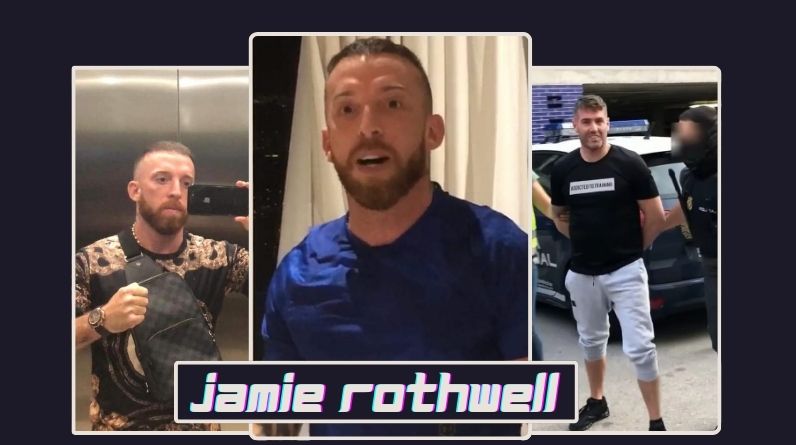
- Jamie Rothwell led a large-scale organised crime network operating across the UK and Europe.
- Encrypted EncroChat messages were the primary evidence linking him to drug trafficking and firearms conspiracies.
- He coordinated international cocaine supply routes and high-powered weapon movements.
- Rothwell was arrested in Spain, extradited to the UK, and sentenced to a lengthy prison term in 2025.
- The case reshaped how British police tackle encrypted criminal communications.
Who is Jamie Rothwell?
Jamie Rothwell is a British organised crime figure from Salford, Greater Manchester, known for leading a high-level criminal network involved in cocaine trafficking, firearms distribution, and violent conspiracy offences. His case gained national attention after encrypted EncroChat messages exposed his role as a senior coordinator within a multi-million-pound drug and weapons operation. Following his arrest in Spain and extradition to the UK, Rothwell was sentenced in 2025 to a long custodial term, marking one of the most significant organised crime convictions linked to the EncroChat investigation.
The Under-Reported Angle: How Digital Evidence Built the Case Against Rothwell
While many reports focus on sentencing headlines, the most significant aspect of the Jamie Rothwell case is how digital surveillance transformed modern organised crime investigations. His conviction demonstrates a turning point where encrypted communication platforms became the primary source of courtroom evidence.
EncroChat: The Digital Footprint That Exposed the Network
EncroChat was marketed as a secure messaging service and widely adopted by organised crime groups. In 2020, European law enforcement agencies infiltrated its infrastructure, gaining real-time access to millions of messages.
For Rothwell, operating under the alias “Live-Long”, these intercepted conversations revealed:
- Direct instructions for drug shipments
- Coordination of firearm purchases
- Planning of retaliatory violence
- Logistics involving couriers and safe locations
According to UK law enforcement data, EncroChat intelligence contributed to more than 3,000 arrests nationwide and the seizure of:
- Over £900 million worth of criminal assets
- Thousands of kilograms of Class A drugs
- More than 1,000 firearms
Rothwell’s case became one of the highest-profile examples of this digital evidence pipeline.
Scale of Rothwell’s Criminal Operations
Drug Supply Networks
Court proceedings established that Rothwell played a leadership role in trafficking large quantities of cocaine and ketamine. Prosecutors linked him to multiple consignments sourced through European supply routes and distributed across Greater Manchester and surrounding regions.
Authorities estimated the street value of drugs associated with his network reached tens of millions of pounds, reflecting the industrial scale of the operation.
Firearms and Weapon Distribution
Beyond drugs, Rothwell’s organisation dealt in high-powered weapons, including:
- AK-style rifles
- Glock pistols
- Pump-action shotguns
- Ammunition stockpiles
Encrypted messages demonstrated that firearms were transported through covert drop locations and trusted intermediaries, often coordinated remotely while Rothwell was based overseas.
Why Rothwell Operated From Spain and the Netherlands
Like many senior organised crime figures, Rothwell attempted to distance himself physically from UK enforcement while maintaining operational control. Spain and the Netherlands have historically been used by criminal networks due to:
- Major international ports and transport hubs
- Established drug trafficking routes
- Large expatriate communities enabling anonymity
Despite these advantages, coordinated European police operations tracked Rothwell’s location and led to his arrest in Barcelona. His extradition illustrated growing cross-border cooperation between UK and EU authorities.
The Trial and Sentencing Process
Charges Brought Against Jamie Rothwell
Rothwell pleaded guilty to multiple serious offences, including:
- Conspiracy to supply Class A drugs
- Conspiracy to possess firearms with intent to endanger life
- Conspiracy to supply controlled substances
- Conspiracy to cause grievous bodily harm
Prosecutors argued he sat at the top of the operational hierarchy, directing subordinates rather than acting as a street-level offender.
The 2025 Sentence
In August 2025, Manchester Crown Court handed Rothwell a sentence exceeding four decades, reflecting:
- The scale of drug trafficking activity
- The presence of military-grade firearms
- The threat posed to public safety
- His leadership role within the conspiracy
The court also imposed extended licence conditions, meaning Rothwell will remain under strict supervision after eventual release.
Impact on Salford and Greater Manchester
Rothwell’s criminal network operated within an ecosystem already affected by gang rivalries and organised crime. Law enforcement agencies linked his activities to:
- Increased firearm circulation
- Drug-related violence
- Community safety risks
Greater Manchester Police have stated that dismantling large networks like Rothwell’s significantly disrupts supply chains and reduces the operational capacity of rival gangs.
What the Jamie Rothwell Case Reveals About Modern Organised Crime
Crime Has Become Data-Driven
Rothwell’s conviction highlights how organised crime increasingly relies on encrypted platforms, logistics software, burner devices, and digital money transfers. However, these same systems now leave forensic trails that investigators can exploit.
Leadership Is Now the Primary Target
Modern policing strategies focus less on low-level arrests and more on dismantling leadership structures. Rothwell’s case shows how removing senior coordinators causes long-term disruption to criminal supply chains.
International Cooperation Is Essential
The successful extradition and prosecution of Rothwell required coordination between British authorities, Spanish police, and European cybercrime units. Without this cooperation, high-ranking offenders could continue operating from abroad.
Common Misconceptions About the Rothwell Case
- “Encryption makes criminals untouchable” – EncroChat proved that platforms can be infiltrated and used as evidence.
- “Only street gangs were involved” – The case exposed complex international supply chains.
- “Sentences focus only on drugs” – Firearms and conspiracy charges carried equal weight.
Practical Takeaways and FAQs
Why was Jamie Rothwell’s case so significant?
It demonstrated how encrypted digital evidence can dismantle senior organised crime networks and secure long-term convictions.
Is EncroChat still active?
No. The platform was effectively shut down after law enforcement infiltration in 2020, triggering thousands of arrests across Europe.
Will Rothwell ever be released?
His sentence includes extended licence conditions. Any release would be tightly controlled and subject to ongoing supervision.
What changed in policing after this case?
UK police expanded cybercrime units, increased digital forensics investment, and strengthened European intelligence-sharing agreements.
Final Insights
Jamie Rothwell’s story is not just about one individual’s downfall. It represents a broader shift in how organised crime is investigated, prosecuted, and dismantled. The case shows that even highly encrypted criminal operations leave digital footprints, and that coordinated international enforcement can successfully bring major crime figures to justice.
For communities affected by organised crime, Rothwell’s conviction marks a significant step toward long-term disruption of dangerous networks and improved public safety.