

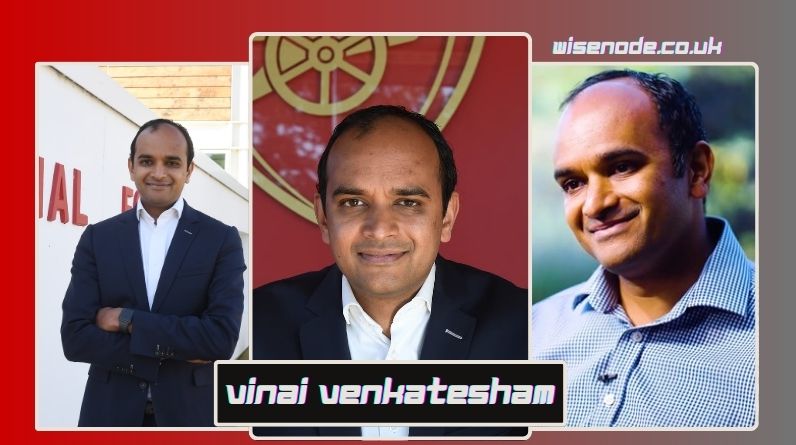
Vinai Venkatesham is a British sports executive known for his leadership roles in elite football administration. With a career spanning major European football clubs and international sporting organizations, he has become a prominent figure in modern sports management. His work has focused on organizational strategy, commercial development, and the long-term operational structure of football clubs.
- Profession: Football executive and sports business administrator
- Known For: Executive leadership roles at major Premier League clubs
- Key Career Milestones: Chief Executive of Arsenal Football Club and later Chief Executive of Tottenham Hotspur
- Industry Impact: Helped modernize club operations and strengthen commercial growth in English football
- Current Relevance: Oversees strategic and operational management at Tottenham Hotspur
Vinai Venkatesham: Background and Early Life
Vinai Venkatesham was born in the United Kingdom and built his early professional foundation outside the football industry. His upbringing and education positioned him for a career in business and strategic management rather than sport initially.
Before entering football administration, he developed experience in finance and consulting. Early roles in commodities trading and corporate strategy exposed him to high-level commercial decision-making and complex international markets. This background provided valuable skills in negotiation, operations, and large-scale project management.
His transition into the sports industry began through work connected to major international sporting events. During the preparation for the 2012 Olympic and Paralympic Games in London, he contributed to commercial operations involving sponsorships, merchandising, and broadcast agreements. The experience offered insight into the intersection of sport, business, and global media.
This early phase of his career established the expertise that later defined his reputation in football administration: strong commercial understanding, structured management practices, and an emphasis on long-term organizational planning.
Career Journey and Rise to Recognition
Vinai Venkatesham entered the professional football industry in 2010 when he joined Arsenal Football Club. His initial role focused on global partnerships, where he worked on expanding commercial relationships and strengthening the club’s international presence.
Over the following years, he steadily moved into senior leadership roles. His responsibilities expanded from partnership development to broader operational oversight, including business operations and strategic planning.
By the late 2010s, he had become one of the key executives within the club’s management structure. The organization underwent significant leadership changes during this period, and Venkatesham was entrusted with greater responsibility in guiding the club’s operational direction.
In 2020 he became Chief Executive Officer of Arsenal Football Club. As CEO, he oversaw both the sporting and commercial sides of the organization, working alongside senior technical staff, managers, and board members. The role placed him at the center of decision-making regarding club strategy, infrastructure development, and long-term competitiveness.
His tenure coincided with a period of restructuring within the club, including changes to recruitment strategy, investment in younger players, and modernization of internal football operations.
Leadership at Arsenal Football Club
During his time as chief executive, Vinai Venkatesham played a significant role in stabilizing and restructuring the club during a period of transition. The organization was adapting to changes in management, squad strategy, and broader industry challenges.
One of the defining aspects of his leadership involved strengthening cooperation between football operations and commercial departments. The objective was to ensure that sporting performance and financial sustainability could progress together.
Several structural changes occurred during this period. Recruitment strategies evolved toward building younger squads with long-term development potential. Data-driven analysis and scouting systems also became increasingly central to decision-making.
Beyond the men’s team, Venkatesham also supported growth initiatives for women’s football within the club. Improvements in facilities, staffing, and matchday infrastructure helped raise the profile and competitiveness of the women’s team.
He also guided the club through a challenging period for global sport when the COVID-19 pandemic affected stadium attendance and revenue streams. Maintaining financial stability while protecting competitive ambitions became a key focus of executive leadership.
By the time he left the organization after more than a decade of service, he had built a reputation as a steady and pragmatic executive capable of navigating complex organizational transitions.
Appointment as Tottenham Hotspur CEO
After leaving Arsenal, Vinai Venkatesham eventually accepted the role of Chief Executive Officer at Tottenham Hotspur. The appointment placed him at the center of one of the most prominent clubs in English football.
As CEO, he assumed responsibility for the club’s overall operational structure, including commercial growth, financial strategy, governance, and football operations support. His mandate involved improving organizational clarity and strengthening the connection between executive management and sporting performance.
One of the early priorities under his leadership involved conducting internal assessments of club operations. These reviews examined areas such as recruitment structure, financial planning, and long-term strategic alignment between different departments.
The role also placed him in regular interaction with supporters, board members, and senior football staff. Maintaining transparency with fans and improving communication channels became part of the broader effort to modernize club governance.
In modern football, the chief executive position requires balancing competitive ambitions with financial regulations, infrastructure investment, and global commercial partnerships. Venkatesham’s experience in both sports administration and business strategy positioned him well for these responsibilities.
Management Philosophy and Leadership Style
Vinai Venkatesham is widely recognized for a management style built around structured planning and collaborative decision-making. Rather than focusing solely on short-term sporting results, his approach emphasizes long-term sustainability and organizational clarity.
Several themes consistently appear in his leadership philosophy:
- Operational Structure: Clear governance systems that separate strategic oversight from day-to-day management.
- Commercial Strength: Strong revenue streams and global partnerships to support sporting investment.
- Data and Analysis: Increased use of data-driven scouting and performance analysis.
- Institutional Stability: Creating systems that allow clubs to remain competitive through leadership changes.
- Supporter Engagement: Improving communication between clubs and their fan bases.
Modern football clubs operate as global businesses as well as sporting institutions. Executives like Venkatesham therefore focus on long-term infrastructure, governance frameworks, and sustainable financial planning alongside team performance.
Influence Beyond Club Football
Outside of his direct roles within football clubs, Vinai Venkatesham has also contributed to broader sports governance and administration. His involvement with sporting organizations and advisory boards has reflected his reputation as an experienced sports business professional.
He has worked with institutions connected to Olympic sports and national sporting bodies, contributing to discussions around event management, sports governance, and the future of major sporting venues.
Recognition for his contributions to sport and sports administration has also come through national honors acknowledging his work within the industry.
These roles demonstrate how football executives increasingly participate in the wider global sports ecosystem, helping shape policy, infrastructure, and the commercial direction of major events.
Public Image and Industry Reputation
Within the football industry, Vinai Venkatesham is often viewed as a strategic administrator rather than a high-profile public personality. His work tends to take place behind the scenes, focusing on organizational development rather than media visibility.
Executives in his position rarely receive the same public attention as players or managers, but their influence on club performance can be significant. Decisions about budgets, recruitment frameworks, infrastructure investment, and governance models all shape a club’s long-term competitiveness.
His career trajectory illustrates the evolving nature of football leadership, where executives with backgrounds in business, finance, and strategy increasingly guide the operational direction of major clubs.
Recent Developments and Current Focus
In his current role at Tottenham Hotspur, Vinai Venkatesham continues to focus on building a modern management structure capable of supporting the club’s long-term ambitions.
Key priorities include strengthening football operations, maintaining compliance with financial regulations, and ensuring that commercial growth supports investment in competitive squads.
The role also involves navigating the rapidly changing financial landscape of European football, where clubs must balance transfer spending, revenue growth, and regulatory compliance.
As football becomes increasingly globalized, executive leadership has become essential in shaping how clubs compete both on and off the pitch.
Common Questions About Vinai Venkatesham
What does Vinai Venkatesham do?
Vinai Venkatesham is a football executive who serves as the Chief Executive Officer of Tottenham Hotspur. His responsibilities include overseeing the club’s operational strategy, financial planning, and executive management.
Was Vinai Venkatesham involved with Arsenal?
Yes. He spent more than a decade at Arsenal Football Club and served as the club’s Chief Executive Officer before moving to Tottenham Hotspur.
What is Vinai Venkatesham known for in football?
He is known for his work in modern football administration, including organizational restructuring, commercial strategy, and executive leadership at major Premier League clubs.
Why is Vinai Venkatesham important in sports management?
His career reflects the growing role of professional executives in football governance. Modern clubs rely on experienced administrators to manage complex financial regulations, global commercial partnerships, and long-term strategic planning.
Understanding His Career in Context
The career of Vinai Venkatesham illustrates how football clubs have evolved into large international organizations requiring professional management structures. Executives must navigate sporting ambitions, global business operations, and complex regulatory environments simultaneously.
While managers and players often dominate headlines, figures like Venkatesham help shape the long-term stability and direction of the clubs they lead. His work across different leadership roles highlights the importance of strategic planning and operational clarity in modern football.
As the sport continues to expand commercially and internationally, the influence of experienced administrators is likely to remain a crucial factor in the success of elite clubs.