

Scalp serums. Strand-strengthening treatments. Protein-moisture balance. A few years ago, this kind of language belonged firmly in dermatology clinics. Now it’s on the lips of hair stylists, wellness editors, and women who have simply decided their hair deserves more considered care.
The skinification of hair is not a passing trend. It is a genuine shift in how women approach their hair health, one that borrows the rituals, ingredients, and principles of skincare and applies them directly to the scalp and strands. And much like skincare, it is making people ask harder questions before they commit to anything that touches their hair.
That includes hair extensions.
What the Skinification Movement Actually Means
At its core, the skinification of hair is about treating the scalp as an extension of the skin, because, anatomically, it is. The scalp has follicles, sebaceous glands, and a microbiome that functions in much the same way as the facial skin. When it is neglected, the consequences show up in your hair: dullness, breakage, slowed growth, and increased sensitivity.
Women who have adopted this approach tend to use fewer, more targeted products, avoid harsh sulphates and silicones, and pay close attention to how their hair responds over time. They are not necessarily product minimalists, but they are deliberate. Every step has a reason.
The logical next question, particularly for women who wear or are considering hair extensions, is whether their chosen method is compatible with this health-first approach.
Not All Extension Methods Are Created Equal
This is where it gets practical. Extension methods vary considerably in how much stress they place on the scalp and the natural hair shaft. Some methods involve keratin bonds applied with heat, which can affect the cuticle layer. Others use mechanical attachments that, if placed incorrectly or left too long, create tension on the follicle.
For someone with fine hair, a sensitive scalp, or hair that is recovering from damage, these factors matter considerably. The skinification mindset asks, ‘What is this doing to my hair, not just what does it look like right now?’
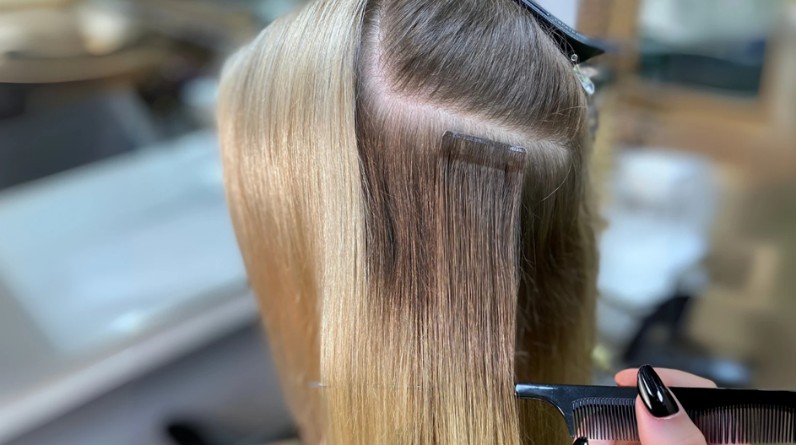
Tape-in extensions address many of these concerns directly. Because they lie flat against the scalp and use a gentle, reusable adhesive rather than heat or mechanical force, they are one of the least disruptive extension methods available for fine or delicate hair.
Why Tape-In Extensions Suit a Health-First Hair Routine
The appeal of tape-in extensions for women following a more considered hair routine comes down to a few practical realities.
First, the profile. Tape-in extensions are ultra-thin and sit close to the root, which means there is no bulk pressing against the scalp and no raised attachment point creating friction during sleep or movement. For a scalp that is already under stress, this is a meaningful detail.
Second, the adhesive. The tape used in well-made tape in hair extensions is medical-grade and does not require heat to apply or remove. When a trained stylist removes them correctly, using the appropriate solution, there is no pulling or tearing at the hair shaft. This is a significant departure from methods that require solvents or sustained heat during the removal process.
Third, the refit cycle. Tape-in extensions are typically repositioned every six to eight weeks as the natural hair grows. This schedule works in favour of a health-conscious routine, because it creates a regular window to assess scalp condition, deeply treat the hair, and confirm that everything is sitting correctly.
What to Look for Before You Book
If you are already committed to a more intentional hair routine, it is worth applying the same scrutiny to the extension process itself. A few things to consider:
Hair quality- Tape-in extensions made from natural human hair behave more predictably under your existing care routine than synthetic alternatives. They respond to the same conditioning treatments, dry in a similar way, and do not conflict with the products you already use.
Colour matching without dye- Factory-produced extensions are usually coloured with heavy dye to achieve a uniform shade, which can affect the cuticle and reduce how well the hair holds moisture. Salons that hand-blend multiple natural shades, such as the approach used at Tatiana Karelina, produce tape in extensions that hold up far better over time, particularly for those following an active conditioning routine.
Stylist knowledge- Tape-in extensions require correct sectioning and placement to avoid any undue tension on the follicle. An experienced hand matters here, not just for the look, but for the long-term health of your hair.
Caring for Tape-In Extensions Within a Skinified Routine
Integrating tape in extensions into a health-led hair routine is more straightforward than many women expect. A few adjustments are all that is needed.
Use sulphate-free shampoo and keep conditioner away from the root area where the tape sits. Apply any scalp treatments before washing, allow them to absorb, and then cleanse gently. Avoid oiling the root section directly, as this can weaken the adhesive over time.
When styling, use low to medium heat where possible. Tape-in extensions made from natural hair can handle a diffuser or a light wave, but the general principle, less heat is more, applies just as much here as it does to your own strands.
Final Thoughts
The skinification of hair is a welcome recalibration. It encourages women to think longer-term about their hair health and to make choices that support rather than work against their natural hair.
For anyone considering extensions within that framework, tape-in extensions are worth a close look. Their low profile, gentle application, and compatibility with a proper care routine makes them one of the more sensible choices for women who want added volume or length without stepping back from a health-first approach.
Your hair and your scalp deserve the same consideration you already give your skin. Starting there changes everything.