

You’ve tried the sleep masks, the magnesium supplements, the white noise machines. But have you ever considered that the missing piece might be a connection to the ground beneath your feet?
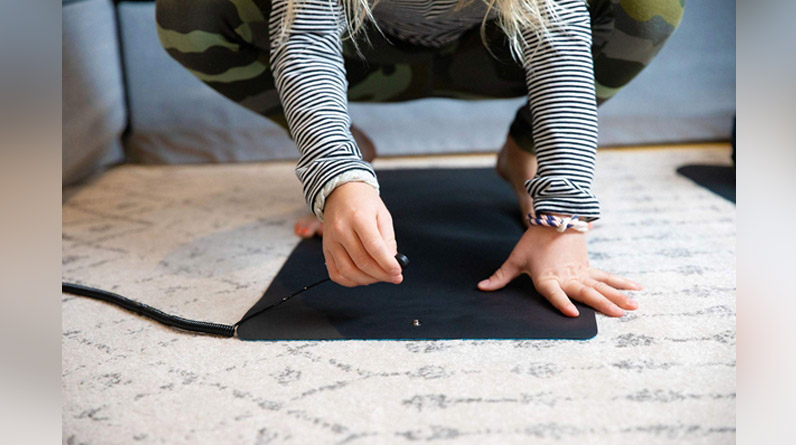
Grounding—or earthing—is the practice of making direct physical contact with the Earth’s surface. The idea is simple: the Earth carries a natural electrical charge, and when you connect to it, your body may absorb electrons that help restore balance at a cellular level. An Earthing Mat brings that same principle indoors, letting you ground yourself while you sleep, without stepping outside.
What the Science Says About Grounding and Sleep
Sleep quality is closely tied to cortisol, your body’s primary stress hormone. Under normal conditions, cortisol follows a 24-hour rhythm—peaking in the morning to wake you up and tapering off at night to let you rest. Chronic stress, screen exposure, and inflammation can disrupt this cycle, leaving you wired at midnight and groggy at dawn.
Research published in the Journal of Alternative and Complementary Medicine found that grounding during sleep helped normalize cortisol rhythms in participants, leading to improvements in sleep quality, pain, and stress levels. The theory is that direct contact with the Earth’s electrons helps reduce the electrical “noise” in the body—the kind that keeps your nervous system on high alert when it should be winding down.
Inflammation is another key factor. Low-grade inflammation is increasingly linked to poor sleep, slower recovery, and a range of chronic health issues. Grounding may help neutralize free radicals—unstable molecules that contribute to inflammation—by supplying the body with negatively charged electrons from the Earth.
Overnight Muscle Recovery and Physical Restoration
For anyone physically active, sleep isn’t just rest—it’s repair. Growth hormone is released during deep sleep, tissues regenerate, and muscles rebuild. Anything that enhances sleep depth or reduces inflammation can support that process.
Some studies suggest that grounding may reduce delayed onset muscle soreness (DOMS) and speed up recovery after exercise. In one small study, grounded athletes showed lower markers of muscle damage and inflammation compared to a control group. While larger-scale research is still needed, the findings are promising—especially for people who train regularly and want to maximize recovery overnight.
Using an Earthing Mat during sleep means you’re potentially supporting that restoration process for hours at a time, rather than just the few minutes you might spend barefoot outside during the day.
How to Incorporate an Earthing Mat Into Your Nightly Routine
Getting started is straightforward. Most Earthing Mats are placed under your fitted sheet or directly on top of it, connecting via a cord to the grounding port of a standard electrical outlet (no electricity flows through—only the grounding connection is used).
A few tips to make the habit stick:
- Start simple. Place the mat at the foot of your bed so your feet stay in contact with it throughout the night. This is often the easiest way to begin.
- Be consistent. Like most wellness practices, grounding tends to show results over time. Aim to use it every night for at least a few weeks before evaluating the effects.
- Pair it with a wind-down routine. Combine grounding with other sleep hygiene habits—dimming lights an hour before bed, limiting screens, and keeping your room cool. The mat works best as part of a broader approach to rest.
- Stay hydrated. The body’s conductivity is influenced by hydration, so drinking enough water during the day may support the effectiveness of grounding at night.
A Simple Practice With Long-Term Potential
Grounding won’t replace good sleep habits, a balanced diet, or regular movement. But as a low-effort, non-invasive addition to your nightly routine, an Earthing Mat offers something worth considering—especially if you’ve been struggling with restless sleep, slow recovery, or persistent fatigue.
The research is still growing, but the underlying principle is ancient: humans evolved in direct contact with the Earth, and modern life has largely removed that connection. Restoring it, even in a small way, may carry real benefits for your body and mind over time.
If better sleep and overnight recovery are priorities for you, it might be worth giving grounding a try.